
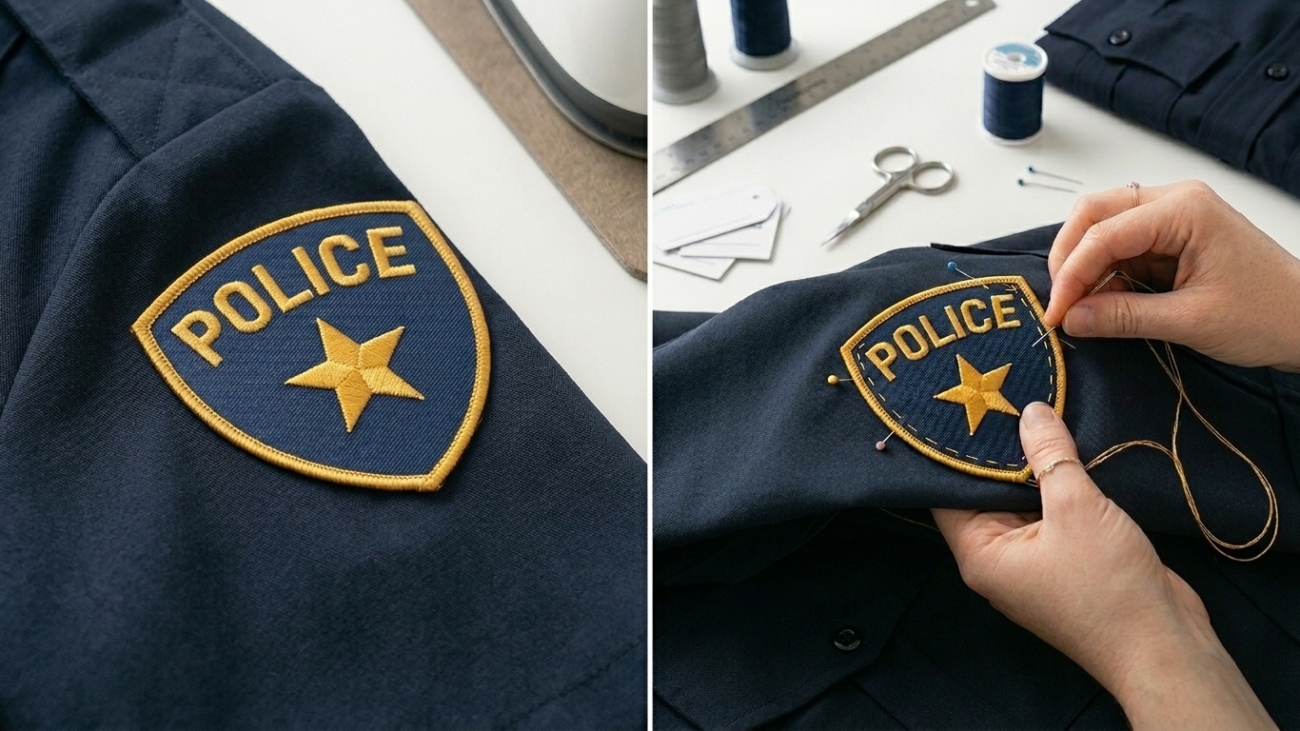
You see it every time a cop walks by: patches on the uniform sleeve that tell you something about that officer.
Those patches mean something. A lot of something, actually.
They communicate rank, specialty, achievements, department—an entire story told in stitches and color.
Whether you’re in law enforcement wondering about insignia systems, a graphic designer creating police patches, or someone simply curious about what those symbols actually mean, this guide breaks down the complete police patch system.
We’ll cover rank insignia, unit badges, achievement patches, how police patches differ from military patches, and how to order custom patches for law enforcement agencies.
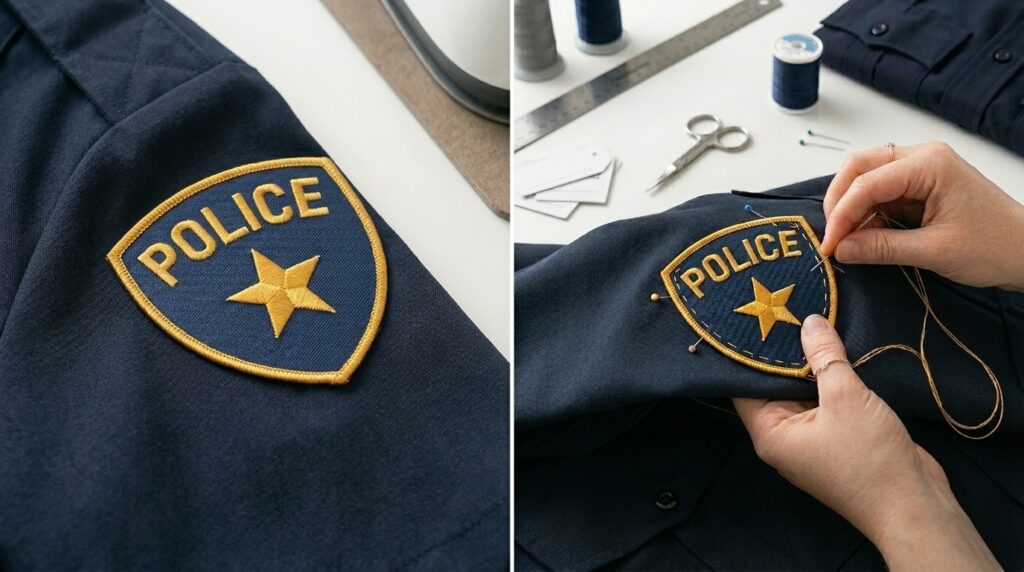
Understanding Police Rank Insignia: The System
Police Rank Structure (How It Actually Works)
Police departments use rank to establish chain of command. Unlike military (which is national and standardized), police departments are local organizations—each one can structure ranks differently.
But there are common patterns:
Chief of Police — Top commanding officer
- Highest authority in department
- Insignia: Star, oak leaves, or custom design
- Coloring: Gold or silver (usually gold for top authority)
- Represents: Leadership, final decision-making authority
- Wears: Badge on uniform, often with additional insignia
Captain — Senior management
- Oversees multiple units or shifts
- Insignia: Bars (typically four horizontal bars) or leaves
- Reports to: Chief of Police
- Represents: Command authority, operational leadership
Lieutenant — Mid-level supervision
- Oversees specific shift or unit
- Insignia: Bars (typically three horizontal bars) or different leaf design
- Reports to: Captain
- Represents: Supervisory responsibility
Sergeant — First-level supervision
- Directly supervises patrol officers
- Insignia: Chevrons (V-shaped, typically 3-4 stripes)
- Reports to: Lieutenant
- Represents: Immediate supervisory authority
- Often multiple types: Patrol Sergeant, Detective Sergeant, etc.
Corporal — Junior supervisor (some departments)
- Assists sergeant with supervision
- Insignia: Fewer chevrons than sergeant (usually 2 stripes)
- Reports to: Sergeant
- Represents: Limited supervisory authority
- Not all departments have this rank
Officer/Patrolman — Base rank
- Patrol, investigations, general duties
- Insignia: Often NO rank insignia (uniform itself identifies them)
- Badge number: Primary identifier
- Reports to: Sergeant or Corporal
- Represents: Line-level law enforcement
Why Police Ranks Vary So Much
Here’s something important to understand: there is no national police uniform or insignia system.
Why? Because police are local/municipal organizations, not federal.
Compare to military: All U.S. Army sergeants have identical insignia nationwide. Standardized. Federal.
Police: A sergeant in Denver might have different insignia than a sergeant in Chicago. Different departments, different systems.
This means:
- Department A might use bars for rank, Department B uses leaves
- Department A’s captain insignia looks completely different from Department B’s
- A new police designer needs to understand THEIR specific department’s system
- No universal standard to follow
This is why custom police patches are so important—each department needs their specific insignia reproduced accurately.
Police Patch Types & What They Represent
Department Patches: Identity & Authority
What it is: Your home department/agency identifier
Appearance:
- Department seal or official logo
- Department name prominently displayed
- City or region identifier
- Unique design (every department different)
Worn on: Left sleeve (traditionally), chest, uniform shirt
Significance:
- Identifies officer’s employing agency
- Shows department affiliation
- First thing people notice on uniform
- Critical for department branding
Size: Typically 2-3 inches diameter
Example: NYPD insignia looks completely different from LAPD insignia, which looks different from your local small-town police patch. Each unique.
Rank Insignia Patches: Communicate Authority
What they are: Rank badges that show officer’s position
Appearance varies by:
- Department
- Rank level
- Officer specialization
- Local tradition
Worn on: Sleeve (most common), collar (dress uniforms), shoulder (some departments)
Critical detail: Insignia must match exact department specifications. Even small variations look wrong.
Why it matters: Citizens recognize rank from insignia. Wrong insignia creates confusion about chain of command.
Unit/Specialty Patches: Show Specialization
What they represent: Officer’s specialized assignment or unit
Common specialties:
SWAT/Tactical Teams:
- Special insignia representing tactical training
- Often more aggressive/tactical design than regular patch
- High prestige within department
- Represents specialized training and qualification
K9 Units (Canine):
- Dog or canine symbol
- Represents handler-dog partnership
- Specialized badge showing dog handling certification
- Growing popularity (K9 units expanding)
Traffic/Highway Patrol:
- Motorcycle symbol or traffic-specific design
- Represents traffic enforcement focus
- Different from general patrol insignia
- Often includes vehicle symbol
Detectives/Investigations:
- Shield or detective-specific badge
- Represents investigative specialty
- Often gold or silver coloring (premium appearance)
- Different rank insignia for detective sergeant, lieutenant detective
Gang Task Force:
- Specialized insignia for gang intervention unit
- Represents focused law enforcement specialty
- Different design than general patrol patches
Narcotics Unit:
- Specialized patch for drug enforcement
- Represents narcotics investigation focus
- Often has distinctive design
Community Policing:
- Patch representing community engagement focus
- Represents relationship-based policing approach
Achievement & Service Patches: Recognize Accomplishment
Service Stripes (Years of Service)
How it works: Accumulate over career
Typical system:
- One stripe per 5 years (varies by department)
- Can also be per year (depends on department)
- Worn below rank insignia
- Accumulates throughout career
Example:
- 5 years service = 1 stripe
- 10 years service = 2 stripes
- 15 years service = 3 stripes
- 20 years service = 4 stripes
Significance: Recognizes experience and career commitment
Why it matters: Citizens see service stripes and recognize veteran officers. Builds public trust.
Achievement Patches & Awards
Types:
Medal of Valor:
- Highest police achievement award
- Recognizes bravery in line of duty
- Rare and highly prestigious
- Career highlight for officers
- Worn with pride and respect
Officer of the Month/Year:
- Recognizes exceptional performance
- Selected by department leadership
- High honor
- Often comes with patch to display
Exemplary Service Award:
- Recognizes consistent high-quality work
- Long-term performance recognition
- Can be awarded multiple times
Perfect Attendance:
- Recognizes reliability
- Important for department operations
- Shows commitment
Training Completion Badges:
- Represents specialized training completion
- Examples: Advanced Investigation, Leadership, Tactics
- Shows officer qualification in specific area
Memorial Patches: Honoring the Fallen
Fallen Officer Patches:
- Worn to honor officers killed in line of duty
- Often includes badge number or officer name
- Black stripe or band across patch (symbol of mourning)
- Worn during memorial events and special occasions
- Powerful symbol of departmental unity
- Commemorates sacrifice and honors memory
Line of Duty Death (LODD):
- When officer is killed in performance of duty
- Department often creates commemorative patch
- Worn by entire department during memorial
- Sometimes worn permanently by close colleagues
Police Patches vs. Military Patches: Key Differences
Understanding the difference helps in design and ordering.
| Aspect | Police | Military |
|---|---|---|
| Authority Level | Local/municipal | National/international |
| Rank System | Department-specific | Highly standardized |
| Insignia Standardization | Varies widely | Universal across branch |
| Hierarchy | Chief to Officer | General to Private |
| Achievement Patches | Department-specific design | Standardized military awards |
| Traditions | Newer (1800s+) | Ancient (thousands of years) |
| Training Badges | Specialty/certification focused | Combat/mission-focused |
| Design Variety | Extreme (50,000+ different designs) | Limited (standardized) |
| Replacement Rate | Frequent (wear out, redesigns) | Periodic (standardized) |
| National Coordination | None | Federal coordination |
Why this matters: When ordering police patches, you can’t follow military standards. Each department is unique. Custom design is essential.
How Police Departments Use Patches
Official Patch System
Standard police uniform includes:
- Department patch (sleeve, left) — Primary identifier
- Rank insignia (sleeve/collar) — Authority level
- Badge (chest) — Individual officer identification
- Name plate (chest) — Officer’s name
Together these elements communicate:
- Which department they work for
- What rank they hold
- Their individual identity
- Their authority level
- Their specialization (if applicable)
Patch Placement Etiquette
Standard professional placement:
Left sleeve: Department patch (primary identification)
Right sleeve: Unit or specialty patch (secondary identification)
Chest: Badge (central, visible identification)
Collar: Rank insignia (dress uniform, formal occasions)
Below rank: Service stripes (years of experience)
Non-standard placement looks unprofessional. There’s an unwritten code about where things go.
Replacement Schedule
Patches are replaced when:
- Worn or damaged (typically annually from daily wear)
- Officer changes specialty or unit
- Officer is promoted (requires new rank insignia)
- Department redesigns insignia
- Seasonal uniform change (weather-appropriate uniform)
- Fading (weather, sun exposure)
- Institutional change (merger, reorganization)
Annual replacement budget: Police departments typically budget 15-20% of patches for annual replacement/wear.
Ordering Custom Police Patches: The Process
Understanding Police Patch Requirements
Police patches have specific requirements:
Official insignia: Must match exact department specifications
Color accuracy: Pantone specs critical (colors must match exactly)
Size standards: Usually 2-3 inches (checked by department)
Backing type: Sew-on preferred (durability), adhesive optional
Quality: High standards (represents department authority)
Step-by-Step: Ordering Police Patches
Step 1: Department Approval (2-3 weeks)
- Consult with department leadership
- Confirm patch specifications (size, colors, backing)
- Get official approval for design
- Ensure design matches official insignia exactly
- Document approval (prevents costly mistakes)
Why this matters: Police patches represent official authority. Wrong design = looks unprofessional and potentially undermines authority.
Step 2: Digitizing & Design (5-7 days)
- Submit official insignia to digitizer
- Digitizer converts to embroidery file
- Digitizer creates digital mockup
- Review mockup for accuracy
- Approve digital file
Critical step: Digitizing must be perfect. Small errors in digitizing get magnified when stitched.
Step 3: Sampling (5-7 days)
- Manufacturer produces sample patch
- Compare sample to official insignia
- Verify colors match (Pantone-accurate)
- Verify sizing correct
- Approve sample or request adjustments
Why sampling matters: What looks good digitally often looks different on actual thread. Better to catch issues on sample than full production.
Step 4: Production (5-10 days)
- Full production begins after sample approval
- Each patch individually inspected
- Quality control throughout
- Batching for shipment
Timeline: Typically 5-10 working days for full production
Step 5: Delivery (2-3 days)
- Patches packed professionally
- Shipped with tracking
- Delivery within 2-3 days domestic
- Distribution to officers
Total timeline: 3-4 weeks from design approval to delivery
Police Patch Pricing
Bulk pricing structure (embroidered patches):
50-100 pieces:
- Per-patch: $2.00-$4.00
- Total: $100-$400
100-250 pieces:
- Per-patch: $1.50-$3.00
- Total: $150-$750
250-500 pieces:
- Per-patch: $1.00-$2.50
- Total: $250-$1,250
500+ pieces:
- Per-patch: $0.75-$2.00
- Total: $375-$1,000+
Variables affecting price:
- Embroidery method (embroidered vs. woven)
- Number of colors (more colors = higher cost)
- Patch size (larger = more thread = higher cost)
- Complexity of design
- Quantity (larger orders = better per-piece pricing)
- Backing type (sew-on vs. adhesive)
Replacement Budgeting
For department with 100 officers:
Year 1: Order all 100 patches = $200-400
Year 2+: Replace worn patches (typically 15-20% annually)
- Annual replacement: 15-20 patches = $30-80/year
Per-officer annual cost: $0.30-0.80 (minimal)
Professional Police Patch Design Considerations
Getting Insignia Right
Critical requirements:
Exact match to official insignia — Small variations are noticeable and unprofessional
Proper colors — Pantone specification must match (not approximate)
Correct sizing — Department has specific size standards
Professional quality — Represents department authority
Appropriate backing — Sew-on most common for police uniforms
Design for Embroidery (Police Specific)
What embroiderers need to know:
- Police insignia often have fine detail and thin lines
- Digitizing must preserve detail while maintaining sewability
- Color separation critical (different thread colors)
- Professional digitizing essential (not DIY)
- Oversized version sometimes preferred (allows more detail)
Real-World Example: NYPD Patch Design
The NYPD insignia includes:
- Police shield (complex geometry)
- Department name
- Specific blue color (Pantone-specified)
- Gold accents
- Complexity that requires professional digitizing
Small department in rural area might have simpler design, but same principle applies: exact specifications matter.
Why Police Departments Order Custom Patches
New Department Formation
Scenario: City creates new municipal police department
Need: 50 officers need new insignia
Patches: Department shield + rank insignia
Timeline: 4-6 weeks before deployment
Unit Creation
Scenario: Department creates new SWAT team
Need: 20 officers need new unit patch
Patches: SWAT-specific insignia
Timeline: 3-4 weeks
Department Rebranding
Scenario: Department updates logo/identity
Need: All officers get updated patches
Timeline: 4 weeks to design, 2 weeks to produce = 6 weeks total
Commemorative Patches
Scenario: Fallen officer memorial
Need: 300 officers get memorial patch
Timeline: Rush service, 1-2 weeks
Annual Replacement
Scenario: Standard wear and tear
Need: 20% of fleet replaced annually
Patches: Routine replacement
Timeline: 3-4 weeks
Professional Police Patch Services
Gem Punch has designed patches for 50+ law enforcement agencies nationwide:
✓ Official insignia reproduction (exact specifications)
✓ Professional digitizing (preserves detail)
✓ Sampling on actual uniform fabric (before production)
✓ Color accuracy guaranteed (Pantone-specified)
✓ Bulk orders (100-1,000+ patches)
✓ Rush service available (1-2 weeks)
✓ Department approval coordination
✓ Application guidance (sewing vs. heat press)
We specialize in police patches because we understand that precision matters.
Your insignia represents your department’s authority. It needs to be right.
Real-World Example: Multi-Unit Police Department
Let me walk you through a realistic scenario:
Scenario: Mid-sized city police department (200 officers) implementing new uniform system
What they ordered:
- Department patches — 200 @ $2.50 = $500
- Rank insignia patches:
- 5 Chief insignia
- 10 Captain insignia
- 20 Lieutenant insignia
- 40 Sergeant insignia
- 125 Officer insignia
- Total: ~$750
- Unit patches (for different divisions):
- SWAT: 20 patches @ $3.00 = $60
- K9: 8 patches @ $3.00 = $24
- Traffic: 15 patches @ $3.00 = $45
- Detectives: 25 patches @ $3.00 = $75
- Total: ~$200
Total investment: ~$1,950 for complete uniform redesign
Lifespan: 12-18 months for daily wear, then annual 15-20% replacement
Annual replacement cost (ongoing): ~$400-500/year
FAQ: Police Patches
Why do police patches vary so much between departments?
Because police are local organizations, not federal. Unlike military (national, standardized), each police department designs their own insignia. No national standard exists.
Can civilians buy or wear police patches?
No. Police patches are official insignia meant only for law enforcement officers. Wearing police patches without authorization is illegal in many jurisdictions (can be charged as impersonation of officer).
What’s the difference between police and sheriff patches?
Sheriff offices are county-level law enforcement. Police departments are city/municipal level. Different hierarchies, different insignia systems, different organizational structures.
How accurate does police insignia need to be?
Very accurate. Even small variations are noticeable to officers and citizens. Professional digitizing is essential. Quality control is critical. This isn’t a place for “close enough.”
Can I design police patches myself?
Not recommended. Police insignia represents official authority. Errors are immediately obvious and undermine credibility. Professional designers with law enforcement experience should handle this.
What’s the difference between embroidered and woven police patches?
Embroidered: Faster production, slightly less detail, $2-3/patch
Woven: Higher quality, more detail, $3-4/patch
Most police departments prefer woven (premium appearance), but embroidered works fine.
Do police patches need to be sewn on, or can they be heat pressed?
Sewing is traditional (more durable, 10+ years). Heat press is faster (2 min per patch) but shorter lifespan (5-7 years). Most police departments hand sew for maximum durability. Learn about both methods.
How often do police patches need to be replaced?
Annual wear typically requires 15-20% replacement per year. Fading and damage from weather and washing necessitate regular replacement. Budget accordingly.
Related Resources
Learn more about police patches and law enforcement:
- Complete Guide to Custom Patches — All patch types and options
- How to Apply Patches — Step-by-step application guide
- Heat Press vs. Sewing Patches — Choosing application method
The Bottom Line
Police patches communicate rank, specialization, achievement, and department identity. They represent official authority.
Because of that, they need to be:
- ✓ Accurate (exact insignia reproduction)
- ✓ Professional (high-quality stitching)
- ✓ Durable (10+ years typical lifespan)
- ✓ Official (approved by department)
If you’re a law enforcement agency needing custom patches, don’t leave this to chance. Work with professionals who understand police insignia systems and can deliver the accuracy and quality your department deserves.
Get Your Free Police Patch Quote
Tell us about your department’s needs and we’ll guide you through the process. We’ve done this for dozens of police departments. We know what works.